Showing posts with label albums of 2005. Show all posts

Monday, January 02, 2006

UK Albums Of 2005 Poll

And so we reach what we like to think is the final word on 2005, as well as our shameless attempt to jump on the parochial music blogger poll bandwagon, as we asked UK bloggers for their lists of albums of the year and collated them into the list you see below. Among the voters were Take Your Medicine, Talent In A Previous Life, Silent Words Speak Loudest, Parallax View, Jamie's Runout Groove, Domino Rally, Delete As Appropriate, Snappish Thoughts, The Adventures Of Flossie and a special guest appearance from man about town and New Games Journalist Kieron Gillen. We also borrowed the lists from Mr Red Penguin and The Indie Credential, who we'd tried to ask but couldn't find e-mail addresses for. We hope they don't mind. (NB. Just to clarify, this poll was for albums released in the UK in 2005, rather than only UK acts)


20 RICHARD HAWLEY - Coles Corner
Sheffield singer-songwriter with the tones of a Roy Orbison or Scott Walker coming complete with a dramatic orchestral sweep, full of nostalgia and love pangs

19 LADYTRON - Witching Hour
Liverpudlian/Bulgarian electro axis coax shoegazing fuzz, vampiric menace and Depeche Modian darkness from their analogue synths

18 MY MORNING JACKET - Z
Jim James and co depart their echo-laden converted grain silo, hire John Leckie and head all over the alt-rock spectrum, from roots rock to Flaming Lips grandiosity

17 ANNIE - Anniemal
The indie Kylie, they've called her, pitching in between the revivalist electro part producer Richard X loves, St Etienne's knowing kitsch and the sheer fun of pop revivalism

16 STARS - Set Yourself On Fire
Named after the Fry and Laurie sketch about satanic messages in metal records, we'd hope. Unlikely, mind, given they're Canadians specialising in widescreen, often string-laden pop

15 M.I.A. - Arular
World music manque, as a Sri Lankan from East London takes on US East Coast Timbaland-inspired beats, Brazilian favela, Jamaican dancehall, Punjab bhangra and worldly dancefloor rhythm

14 KANYE WEST - Late Registration
The Route One method of hip hop superstardom - deliver a highyl singular album at once confident of its genre surroundings and redefining its boundaries and layers of work as it goes

13 ELBOW - Leaders Of The Free World
Guy Garvey, clearly now a big man out of shape, starts with the simple pleasures of returning home and ends mourning what he's lost there. Anthemists too clever to be as big as Coldplay

12 GIRLS ALOUD - Chemistry
Number one act in the UK list curated by Take Your Medicine and now setting out to prove it, Xenomania working overtime on electropop rushes, lyrical insouicance and pure fun energy

11 MARTHA WAINWRIGHT - Martha Wainwright
Rufus has the stage costumes and the French & Saunders guest slot, but Want Two was comprehensively outdone by little sis' fragile, autobiographical poetics and folk-blues delicacy

10 LOW - The Great Destroyer
They're not slowcore any more, it's fair to say. Instead we have huge, lush yet droning soundscapes that retain the harmonies and melodic ability but take a detour by an overdrive pedal

9 MEW - And The Glass Handed Kites
If they must be prog, at least it's easier to live with than the Mars Volta's version, the Danes relocating their Pixies/MBV dynamic intensity to a Sigur Ros-type singular atmosphere

8 THE DECEMBERISTS - Picaresque
"Writer of fictions" Colin Meloy does just that, but now finds his intricate short stories about spies, rent boys and lost sailors surrounded by complementary dramatic musical flourishes

7 ANTONY AND THE JOHNSONS - I Am A Bird Now
They've outdone the Kaiser Chiefs again. If they've got this far on Antony Hegarty's voice, maybe it's time now to talk up the quality of the torch song backings and emotive lyricism

6 EELS - Blinking Lights And Other Revelations
Mind if we're overly surprised by how this nearly made it to the top five? A sprawling double album filled with uncommon optimism next to heartfelt melancholia crafted with E's usual care and attention

5 MAXIMO PARK - A Certain Trigger
The album that pulled them right out of the suited post-punk pack, filled with curious charisma, an abundance of hooks and a kinetic energy of their own. Works as a straight up sequenced album, too

4 ART BRUT - Bang Bang Rock And Roll
Eddie Argos is the Noughties Jarvis the style mags will surely soon claim he is, with a wry sense of humour, an awareness of pop culture that extends to his band's amorphic indie sound and a well slipped sexual mask. Top of the pops, indeed

3 BLOC PARTY - Silent Alarm
The problem with formulating an art-rock backlash is that its main protagonists tend to ruin it by releasing albums like this one - angular, awash with propulsive energy, playing to its effects-laden strengths but perfectly aware of slower dynamics

2 SUFJAN STEVENS - Illinois
Oregon next, it's rumoured. It'll be going some to match this eclectic mix of personal and spiritual appropriation, lush and usually self-recorded musicianship, production inventiveness and exceptional songcraft filled with senses of place and character

1 ARCADE FIRE - Funeral
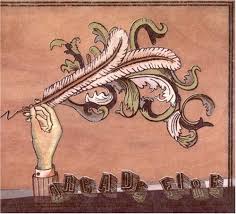
Our personal number one too, but it ran away from the rest regardless and stayed a mile clear throughout. Bringing light from the personal depths several of the band found themselves in, they drove themselves to create a virtually unique sound that references touchstones while pulling away from them, totally committed in emotional lyricism and musical landscaping. Just think - they've now got to work out how to follow it

Saturday, December 31, 2005

Albums Of The Year: Number 1


Some albums you can sense coming. Going backwards in this list alone, surely most people who followed the Decemberists' career path could see them developing away from the piratical bent towards a fuller sound to complement Meloy's stories; early talk of the Elbow album had led us to expect something homely yet worldly at the same time; Sufjan has always sweated the small stuff; even though Maximo Park were virtually unknown at the end of 2004 the north east had a growing reputation. What we think was part of the greatness of Funeral, an album that we've had in one form or another for more than a year and are still deriving fresh enjoyment out of, is although Canada had a similarly burgeoning scene over the previous couple of years there was no real collective drive or line that could be drawn between, say, GY!BE, the Dears and Broken Social Scene. While the Arcade Fire were known locally as a purveyor of mini-epics, it doesn't seem as if there was a weight of expectation up to last autumn. Then this came out, and suddenly it all made all kinds of sense.

Like most people, we have a theory that truly special songs have to have a moment or a passage which just lifts the song out of mere qualified praise and into something just special, and listening back to Funeral it dawns on us that every single track here has one: the wordless ghostly mini-coda on Tunnels - you won't mind if we abbreviate the Neighborhood sequence, will you? - immediately after Win Butler's voice finally cracks under the strain, the way everything but the drums and violins drop out after the second chorus on Laika, the way Une Anne Sans Lumiere subtly alters from a second cousin to Another Brick In The Wall to a dank campfire lament and then launches the distorted guitars and echo to disrupt the temporal flow, Power Out blistering out of the blocks and becoming more overwhelming to the culminating point of Win's desperate cry "you ain't fooling no-one!", 7 Kettles' dramatic strings, Crown Of Love's jarringly playful waltz time against melodramatic strings that suddenly find themselves leading on the gatecrashing disco drums, Wake Up's unresting, fist pumping big drums up until the moment it goes all You Can't Hurry Love, Regine Chassagne melding her voice, her voice at a higher octave and a droning organ at a similar pitch at one moment during the not un-Sugarcubes-esque Haiti, Rebellion (Lies) building and building constantly upon its basic themes as if driven on by the "lies! lies!" backing vocals, and In The Backseat fooling the listener into lulling on the bed of gorgeous strings and Chassange's voice until briefly exploding with overdriven guitars and violins and ending with a fadeout freak-out. In this age of the single track, this is an album that works as an album, establishing a thematic and musical arc from beginning to end, heading through the emotions from peace to bombast and never sounding jarring no matter where the instrumentation or jagged melodies go - a word for the self-production placing it squarely in its own locale and time. Butler's voice is an unusually, at least by the standards of the current North American alt scene, passionate one, tremulous in a way that seems to have been at the centre of the early Flaming Lips comparisons but stronger and more powerful and adaptable than Wayne Coyne's, while Chassange takes the Bjork comparisons on board but without the offputting 'kooky' aspects, her use in small doses perhaps their cleverest move. Funeral is driven by feelings as much as the song layers within without ever slipping into cloyingness, surely due in no small part to the writing and recording process being enveloped in much talked about personal loss, evoking a range of emotions from mourning and sadness through understanding to an acceptance that events might have been taken away from the narrator. It also seems the narrative grows up as the album progresses, from the almost naive invocation of "parent's bedrooms" and "the names we used to know" on Tunnels to the heartbreaking couplet at the end "Alice died in the night/I've been learning to drive my whole life". The fact that of the early comparisons - the aforementioned Flaming Lips, Talking Heads, Bowie, Pixies, Neutral Milk Hotel - you can hear elements but none really ring true in the overall scheme of things proves that this transcends any attempt to place it in a legible context of North America's post-emo dramatic scene-ette. You know, just like proper great albums.

Here's something. For all the hype, it's still largely being discovered fresh by word of mouth, overhearing a track or two on the radio or that BBC autumn drama trailer, or just fans writing fevered write-ups not dissimilar to this one rather than by being pushed down the throats of potential consumers. 74 reviews on Amazon.co.uk have given it a surely unprecedented for that weight of opinion 4.8 out of 5 rating - it's an album its fans really want to tell people about once they get it. There was a new Mercury Rev album out at the start of 2005. You might be forgiven for having missed or forgotten it, such was the air of "uh... right" about it in this era of ultra-fast movement. It's not so long since people talked about Deserter's Songs in much the same way, so complete and emotionally charged a package was it, but that never achieved the positivity right across the board, where even U2 can take them on and not make them guilty by association. It'd be a shame if in five years time an Arcade Fire album was just allowed to slip by in the same way as The Secret Migration largely has with the music press. They say the end of a life is merely a detour in the cycle of life. Here is marked out an exciting talent with an album that will by rights be remembered and talked about for years.

LISTEN IN: Neighborhood #1 (Tunnels)
EXTRA FEATURE: The development from local interest to international acclaim: Stylus review the EP in 2003, Tiny Mix Tapes chat to Win at the start of 2004 and he talks about new song Rebellion, Said The Gramophone and Jeremy Brendan - My Life As A Reptile attest for their live reputation at about the same time, Said The Gramophone catch up with them again a few months later, then advance copies of the album arrive with Exclaim, Teaching The Indie Kids To Dance Again and Stereogum.

A reminder of the full countdown

Friday, December 30, 2005

Albums Of The Year countdown: 20-2

20 LCD Soundsystem - LCD Soundsystem
19 Okkervil River - Black Sheep Boy
18 Antony & The Johnsons - I Am A Bird Now
17 Franz Ferdinand - You Could Have It So Much Better
16 The Boy Least Likely To - The Best Party Ever
15 Field Music - Field Music
14 New Pornographers - Twin Cinema
13 British Sea Power - Open Season
12 Patrick Wolf - Wind In The Wires
11 M.I.A. - Arular
10 Brakes - Give Blood
9 Sons And Daughters - The Repulsion Box
8 Mew - And The Glass Handed Kites
7 Bloc Party - Silent Alarm
6 St Etienne - Tales From Turnpike House
5 Maximo Park - A Certain Trigger
4 Sufjan Stevens - Illinois
3 Elbow - Leaders Of The Free World
2 The Decemberists - Picaresque
1 Arcade Fire - Funeral

(Our full list aided Indie For Dummies' worldwide blog top 100)

Albums Of The Year: Number 2


On The Engine Driver Colin Meloy declares himself "a writer, writer of fictions". Oh well, we can all say we're like that should we be lyricists, but there's little doubt that the man who called a track on their previous album I Was Meant for the Stage has an air of old-school showbiz blood in him, that of, if applied to an English setting, provincial repetory theatre and off-kilter short stories from McSweeney's monthly anthologies, or in this case leads to Meloy's belief in the story-song, previously basing songs loosely on Under Milk Wood and 18th century London. And not in the John Cooper Clarke sense either. Songs on Picaresque are set among spies, soldiers, rent boys and inside the belly of a whale. Perhaps the most outlandish thing about it, though, is that it works.

That's because Meloy clearly believes, albeit with a decent layer of English major storytelling, in doomed love. Opener The Infanta may well include the words 'palanquin', 'concubines', 'pachyderm', 'canopied', 'largesse', 'barrenness', 'phalanx', 'betrothed', 'parapets', 'rhapsodical', 'folderol', 'chaparral' (a rhyme!), 'coronal' and, oh yeah, 'infanta' (the daughter of a Spanish or Portuguese king, if you must know) but it's built on dramatic guitars and strings intertwined, widescreen ambition and dark musings. It almost seems perfectly natural to see those words on a lyric sheet. Among the scene setting and spinning out we find a deep core of true love torn apart (For My Own True Love (Lost At Sea), We Both Go Down Together), never to be fulfilled (The Bagman's Gambit's crossing the Cold War divide) or really wanted (the clients of the gay teenage prostitutes of On The Bus Mall) and on other tacks This Sporting Life's Lust For Life reference against a refraction of the brain over brawn mindset via a failed, fallen athlete of some stripe and Sixteen Military Wives' oblique skewering of governmental hawks and unthinking bandwagoners alike. Meloy clearly finds an affection for his personnel, helped by his harbouring one of those voices that you wouldn't recommend to Louis Walsh but convey the raw emotional core and thus heighten the senses conveyed. Course, while it's all very well talking about the lyricism, songs do also usually involve music, and here the Decemberists hit a personal best, often building from careful, spacious, intimate acoustic guitar to big dramatic sweeps - Petra Hayden's addition to the line-up helps - while never becoming overblown, complementing the words and settings perfectly. The Decemberists are an ambitious band in many ways. Picaresque is where they see their high standards attained.

LISTEN IN: We Both Go Down Together
EXTRA FEATURE: Live they're quite something, we're told and The Live Music Archive attempts to prove. Meloy had words with Amazon, Inlander and the Guardian.

Thursday, December 29, 2005

Albums Of The Year: Number 3


You have to feel for Guy Garvey. He spends months pulling together an album of rare sympathetic craftsmanship, a grandiose scope that pulls them far clear of the uber-lazy Coldplay comparisons - mid-tempo, occasionally anthemic, English, that'll do - and gutwrenchingly personal songwriting, to misquote one of Elbow's old songs pulling his heartstrings apart and letting the sun out, that he'd have every right to shout from the rooftops about. Then he goes out to do the promotional rounds, whereupon every interviewer spends most of the allotted time going "so, it's about Edith Bowman, isn't it?" He must wonder why he bothered. What it also means is we'll have to do the shouting for him, then.

Elbow have always been a band against the world, from songs which build and build until erupting with a euphoric chorus of "we still believe in love, so fuck you" to the very fact that they emerged at the turn of the century with Mellotrons, seven minute singles and a frontman who sounded like Peter Gabriel encased in gravel yet didn't go the Spiritualized route or be dismissed as prog. On Leaders Of The Free World Garvey's mind turns to disproving Thom Yorke's theory that directly personal songs are uninvolving for everyone else. The first track, Station Approach, is about returning home after touring, an elephant's graveyard of a song subject, yet it's an immensely touching portrayal of needing to be around the people and places you trust, a love letter to Bury in many ways, and sets the scene for an album full of passion expressed both as what encases a state of sorrow and a kind of hopeful longing, a state that says its owner is happy, thanks, it's just everyone else who sees him as down (cf My Very Best). It's the kind of light touch with a heavy soul that makes Forget Myself an anthem for the pub lads that speaks to their soul and the title track a Bush/Blair political statement that hardly breaks ideological ground but shakes its head all the more forcefully at the barminess of it all. At its peaks it encapsulates loss and loneliness, romance both as fear and memory. Where Cast Of Thousands could overall only bring itself to flirt with these big themes and orchestration and was ultimately disappointing itself as much as the listener, this one picks up the baton and goes for it, bringing with it Garvey's now hardly matched knack for picking out the best cliche-free imagery and a band, for this is still a tight, inventive band, at ease with itself but willing to play with their own preset boundaries. Oh, and if we must see it as a signpost to the album, please note that Bowman made the album her record of the week on Radio 1. Perhaps she recognised the universality of the personal approach.

LISTEN IN: Mexican Standoff
EXTRA FEATURE: BBC Manchester house an audio interview and acoustic versions

Wednesday, December 28, 2005

Albums Of The Year: Number 4


The true glory of Sufjan Stevens' much remarked upon shot at documenting all fifty states through song is not that he seems serious about it - if he wasn't, he's dug himself into something of a hole - but that this first attempt to document lives and histories outside his own home state shows how he's going to achieve the frankly unlikely feat, namely by thinking as big as his idea is. Big titles in the tracklisting, for one, and we can only dream of the day when Sharon Osbourne announces that "I think he's really showing what he's capable of, and I think he'll own that stage when he realises The Black Hawk War, Or, How To Demolish An Entire Civilization And Still Feel Good About Yourself In The Morning, Or, We Apologize For The Inconvenience But You're Gonna Have To Leave Now, Or, 'I Have Fought The Big Knives And Will Continue To Fight Them Till They Are Off Our Lands!' is made for his voice". (Alright, that one's a gallant instrumental, but you get the point.)

It's not as if Sufjan's previous two albums had demonstrated a flair for minimalism, but on Illinois the near-orchestral sweeps and sheer joi de vivre as expressed through the medium of the showtune seem to be able to fill every available space when required and pare back into the background. Lyrically, all human life is here, the themes expanding on often small-scale accounts, whether tracing the backstory of John Wayne Gacy Jnr before claiming "in my best behavior I am really just like him" or on Casimir Pulaski Day's heartbreaking story of the narrator's love dying of bone cancer on a state holiday. Perhaps as a born and bred Michigan man maybe the overall approach, mixing the personal with the more obvious local landscapes and signifiers, could easily have slipped into the banal and almost patronising, but the album's great strength is that the listener doesn't notice the possibility as so much potential guidebook aided frippery is turned effortlessly into deeply personal songs and an awareness of the space in which we live, which you'd be tempted to strip back and label spirituals, which in turn might be why Stevens has emphasised the arrangements and often unusual instrumentation, most of which he plays himself - this is a party he's throwing to celebrate a state in which he doesn't even live, it's just he wants to say a few words from the heart in the middle of it. That he went on to tour these songs with a band called the Illinoisemakers who performed cheerleader chants to introduce every song and ended gigs like this...


...said much.

LISTEN IN: Decatur
EXTRA FEATURE: There is actually such a thing as Casimir Pulaski Day. More directly, you'd have to be well read to come up with such stories and Stevens pretty much qualifies through his writing for the New School Literary Journal in 2000.

Tuesday, December 27, 2005

Albums Of The Year: Number 5


About, ooh, once a year an album starts steadily and then several months later jumps out at you, when everything you'd superficially heard before suddenly emerges at the front of your brain and demands that you go back to the source again and again. On first listen, Maximo Park's A Certain Trigger resembled an accomplished set of post-punkeries, not as willingly ennobled to studio trickery as Bloc Party, not as street smart as Franz, lacking the barely controlled sprint finishes of the Futureheads, and certainly without the modern giveaway ground level chatter of all three prior to their first release. Then, without warning, around the time of its Mercury nomination, it suddenly dawned on us that this is an album that sets its own stall out in the middle of a busy market having revised all the tricks first.

Without getting into the debate about what Warp saw in them - perhaps Steve Beckett just liked their approach, and after all he ran Gift Records primarily to release Maximo's kindred spirits Pulp - there's definitely a lot of musical forward thinking that's gone into their sound. Hooks are plentiful but carefully disguised, song structure is maintained but played well and the whole thing moves at once with an elegance and also a kind of freneticism born of that kind of carefully streamlined musical manaicism that marks out a band unwilling to toe the record label in the midst of a scene party line - witness the spiralling bridge of Graffiti or the charge of the chorus of Once A Glimpse, roughed up where others would apply coats of gloss, and that's before we've got onto the Arab Strap-gone-krautrock drone of Acrobat. The Pulp link comes in Paul Smith's lyrics, utilising Jarvis' way with sexual frustration, stripping it of all implied lust and replacing it with a quiet seethe about why the world around him has let him down again, laced with the kind of self-deprecating humour that's seemed de rigeur for the whole Tyne & Wear scene since Bryan Ferry started crooning, a scene, by the way, that they've come up from well behind to run away with commercially. If it's not all down to the star jumps, it must be the connection with heart and mind alike that's done it.

LISTEN IN: Limassol
EXTRA FEATURE: Is this our excuse to dig out that picture of Smith when he looked slightly different again? He's come a long way since, stopping by Amazon to reveal the music we should be interested in

Monday, December 26, 2005

Albums Of The Year: Number 6


More people think they have a handle on what it is that Saint Etienne do than actually could spell it out. Once they were almost dismissed as kitsch well before the ironists picked up on the term and held it aloft as their banner, by which time they'd serenely moved through house, glam futurism, widescreen pop, every major musical movement to have come out of Detroit before this century and even faceless Italian rave (as Cola Boy). Oh, and then they went all orchestral tropicalia and easy listening Krautrock. A cheery concept album about inner city life was always the inevitable step forwards. The trick messrs Stanley, Wiggs and Cracknell have pulled off is to avoid the twin traps of patronisation and overglamorisation. This is Saint Etienne. Neither would ever be on the agenda.

The glory of Tales From Turnpike House is that despite being indebted in parts to French chanson, casual Eurohouse that ought to make the entire output of AATW Records redundant at a stroke, harmonies from around Brian Wilson's sandpit and the new Scandinavian electro scenesters, it remains resolutely British. Londonist, in fact, packed out with metropolitain melodrama, situated not in the Notting Hill penthouse fame brings or down among the deadbeat men spilling out of the pub but in the decaying pre-fab flats and expanses of East London wasteland their two recent films have glorified. You know, where actual people with real lives live. From Sun In My Morning to Goodnight, titles which kind of spoil the story arc timeline, this is a less electronically inclined work, although Brian 'Xenomania' Higgins pops by with his bag full of spotwelded computerised hooks, using acoustic guitars and glacial atmospheres to create rounded characters and situations, using Pete and Bob's journalistic experience to document fictional lives being led in a real sense. They've gone and wrongfooted us all again after all, and we're glad.

LISTEN IN: Milk Bottle Symphony
EXTRA FEATURE: As mentioned, Bob and Pete have been making films of late

Sunday, December 25, 2005

Albums Of The Year: Number 7


It's funny, but for the majority of 2005 it's been evident that certain people can't wait to trigger a Bloc Party backlash. The Bravery eventually came along and diverted their attention, but for a while there parts of the media were looking for a post-punk revival sacrificial lamb and their name came up quite a bit. Which is odd, as nothing blazed a trail right through the middle of the self appointed scene quite like Silent Alarm, an album crackling with tension, unafraid to make itself look big, yet knowing the value of a good hook as much as how to take a sudden left turn into dissonance. It sounds like a group of men each with their own ideas on jagged dynamism thrown together and told not to come out until they've come up with something that sounds in any way together. Out of that has come a record confident in its own component parts while rearing up with its own private idea of adventure.

They can use an effects box well too, as opener Like Eating Glass proves before developing into a driving statement of intent. In fact, the whole album is decorated with moments which define the song they house by how they take it to the next level of emotional pull. For example, many saw Helicopter as a political statement (Kele denies this) wrapped in self consciously arty clothes, but for our money the bit that is occasionally referred to as the bridge where one guitar apparently gets stuck during a glissando, the other adds flourishes on the theme of the riff, then suddenly band MVP Matt Tong slips up a couple more gears and everyone frantically races each other to the end might be the single most exciting moment produced in at least British music during the year. Even the slower songs glisten with mini-electrical storms and sophistication remaining tantalisingly unresolved, making it at once an album that floats above the clouds and plummets through them at high speed. And yes, at the end of the year everyone seems to have realised it's any good after all.

LISTEN IN: Positive Tension
EXTRA FEATURE: The secret world of bassist Gordon Moakes - he can talk all he likes now, but we've discovered his Shellac-reviewing past (we suspect he doesn't have that email address any more) Meanwhile Tong lists his own favourite albums of 2005 for Filter, until he runs out and starts making up bandnames.

Saturday, December 24, 2005

Albums Of The Year: Number 8


Let's not beat about the bush, Mew made the best album of 2003. The Danish invaders created a playground for classic Scandinavian slow-burning pop suss on one side and Kevin Shields' distortion pedals on the other and let them fight to the death. Michael Stipe invited them on tour, Helena Christiansen took their photos, Brian McFadden introduced She Came Home For Christmas on CD:UK Hotshots and almost seemed interested in what he was saying, and it briefly looked like they were about to make an entry into the wider pop consciousness, albeit through a narrow side door. So what do they do next? Why, a near hour-long exploration into angular indie-prog boasting lyrics with only a passing acquaintance with the English language as we speak it, sporting no breaks between tracks, called And The Glass Handed Kites, and saddled with the cover you see above. The band bookers for the Smash Hits Poll Winners Party looked elsewhere.

So the linking devices between songs don't work all that well - it's alright, second track Chinaberry Tree could have had a minute and a half cut off its 3:30 duration and nobody would mind - but over time it begins to make an odd sort of sense. Producer Michael Beinhorn has worked with everyone from Korn to Herbie Hancock and brings to the affair the feel of a band piling everything on top of everything else until the moment it starts to shake, ultra-taut bass underpinning Thurston Moore's guitars (guest J Mascis would understand) and atmospheric synths topped with Jonas Bjerre's skyscraping vocals and sometimes seemingly in two time signatures at once. Then comes a truckload of melody, the move from Apocalypso's intra-band staredown to Special's pop melody to The Zookeeper's Boy's stately heaviness summing up the album as much as how the album suddenly turns into Sigur Ros right at the end. It's art-pop, but not as the charts would understand it.

LISTEN IN: The Zookeeper's Boy
EXTRA FEATURE: Wessex Scene get that EXCLUSIVE interview

Friday, December 23, 2005

Albums Of The Year: Number 9


The only time we've seen Sons And Daughters was outside at a festival. An overcast, sporadically wet festival, but that's not good enough. The place where The Repulsion Box yields its best results would seem to be somewhere dank, forbidding and possibly haunted. You might recall Sons And Daughters as the Franz-approved band attempting to merge punk-funk with alt-country on their Love The Cup mini-album. This album found an alternate way of realising the dilemma, taking in the intense junkyard blues of PJ Harvey circa Dry or the Birthday Party, garage rock's unrelenting rhythms and the taut tension of a Come On Pilgrim-era Pixies. Some things remain unchanged - Adele Bethel and Scott Paterson often sounded like they'd be at each other's throats if they weren't performing, it's just now they want to be at ours too.

So yes, opener Medicine sounds like Yummy Yummy Yummy I've Got Love In My Tummy, but as played in an articulated lorry speeding over traffic calming devices. On Choked Paterson makes a slide guitar sound like prime Sonic Youth, while Rama Lama extends over five minutes, incorporates Morricone whistling against an often minimal backing and still retains the air of slow decay somewhere underground. Now imagine all this fronted by two people with Glaswegian accents and audible sneers. You perhaps see what we mean about their incompatibility with outdoor performances now. Going hell for leather at everything, barely keeping itself under control for three minutes at a time, if it went on for any more than its 31 minutes it'd become far too overwhelming, as it is settling for mere claustrophobia, the band pinning themselves back to the wall by the sheer force of their playing. That great crossover potential will just have to wait its turn while the rest of us get lost in the tidal wave of mutant country punk rockabilly.

LISTEN IN: Red Receiver
EXTRA FEATURE: Channel 4's Ideas Factory gets, well, ideas from Paterson

Thursday, December 22, 2005

Albums Of The Year: Number 10


Brakes ahead of the parent group British Sea Power? Believe us, we gave it quite a bit of thought before deciding that Eamon Hamilton needed promoting from be-beaniehatted keyboard tickler and big drum whacker to superior leader of what nobody really refers to as an indie supergroup given the Electric Soft Parade haven't sold any records for three years or so and the Tenderfoot never did. (Yeah, but we're willing to utilise the phrase for Zumpano/Destroyer/Neko Case And Her Boyfriends collaboration at 14. Never mind.) Why? Because, frankly, it's a lot of fun and, for an album that glories in its being tossed off in a week, there's a lot more thought going into it than there has been in a lot of the year's more diligently planned releases.

Essentially Give Blood is two mini-albums cut and shut together. One is an excursion into country stylings that comes across like a good white wine laced with strychnine. Over here guitars slide and twang, the Duke Spirit's Liela Moss drops by for a spirited run through Johnny and June Carter Cash's Jackson, the Pipettes turn the Jesus And Mary Chain's Sometimes Always into funpop and the effect is Ryan Adams being dragged towards a buzzsaw. The other album? That channels the spirits of the Minutemen, Jonathan Richman, McLusky and Sam Kinison, and then compresses it all into a tiny cube of musical scrap metal, as in metallic guitar sounds looking for a scrap. Didn't like the ten second Cheney? Try the five second Comma Comma Comma Full Stop. That's before we've got onto the liquidised DFA of All Night Disco Party or the way the end of Heard About Your Band singlehandedly vindicates the phrase "whatever, dude!" As a rule, the tracks either make no sense or lacerate everyone else they can think of. Eamon's mission accomplished.

LISTEN IN: Heard About Your Band
EXTRA FEATURE: Eamon explains himself to SoundsXP

Wednesday, December 21, 2005

Albums Of The Year: Number 11


In the parts of the music discussion Internet world seemingly designed to ward off the casual browser there's been something of a sustained backlash against M.I.A. "Class tourist political figurehead say-nothing art fraud!" they chorus. When Galang '05 was discussed on 6 Music's Roundtable review show, the concensus was that it was too wrapped up in its own political stance, whatever form that stance was taking in the song as at least one panellist admitted they couldn't make out its message. Yeah, cheers. Incidentally, that's her biggest single to date, which was also accompanied by a Mercury nomination, Radio 1 playlisting and a Jo Whiley session, acres of newsprint, daytime music TV exposure and style magazine wall to wall features. It peaked at number 77. It's not difficult music to get a handle on, certainly in a market that has embraced less voluble versions of its second cousin grime. Mind you, even ultrapop behemoths Girls Aloud stopped selling records the moment web reviews started reading "actually, this is great!"

So what is Arular? It's grooved out hip hop, reggaeton, glitchpop, favela funk, Neneh Cherry moves, and at the centre a dynamo running off the pure energy of what surrounds her. Bringing lyrical imagery of the land of Sri Lanka at a particularly volatile point of its recent history and melding it with cod-Jamaican slang and pure London girl sass, making for a genuinely thrilling ride, allied to which is the sort of production backup that emphasises its rollercoaster nature, whether the Fat Truckers' Ross Orton playing his usual electro games or Diplo turning the Rocky theme horns into pure baile funk. Fire Fire namedrops both Timbaland and the Pixies, and it's not hard to see Arular making its own connections between Missy Elliott broken beats and controlled ferocity as played on Roland 505s rather than Joey Santiago's Les Paul. And really, isn't the whole political angle overplayed by people willing to take the background laid out on her press releases and run towards the nearest point marked 'cheap controversy pointscoring'? But again, we're getting confused between the artist's supposed artifice and the songs, and you don't hear artist information sheets being read out at clubs.

LISTEN IN: Fire Fire
EXTRA FEATURE: Elastica's video for difficult second album single Mad Dog (dir: Arulpragasam, M)

Tuesday, December 20, 2005

Albums Of The Year: Number 12


We were vaguely aware of Patrick Wolf's reputation as the urchin child - proper urchin, not Pete Doherty wearing ragged jackets - of the electrofolk scene but were struggling to fully get it until we saw him live. Shorn of anything eminating from a laptop, we were won completely over by the oddly approached but meaningful songwriting and sheer, well, musicianship, if that doesn't put too many off. Wolf studied composition at the Trinity College Music Conservatoire and it was here that it showed - whereas so many who play in the shifting genre of electrowhatever value the glitchpop over the melody, these songs have light and shade, completely in control of their own dynamics, blood running through their theoretical veins. The songs are never crowded, which allows his own elliptical worldview to take centre stage. When he sang The Shadowsea live acapella, the rest of the room, in no mean feat, turned deathly quiet.

Wind In The Wires was recorded in Cornwall and it sounds like it, or at least a short story version of it, beyond naming tracks Teignmouth and Land's End - windswept, overcast and inhabited by characters beset with wistfulness edged out by some form of seasonal afflictive disorder. Whatever bad place Wolf found himself in while writing has fed into a set of songs founded against whatever life has thrown at the narrator, feeling down but often sensing the silver lining is on its way. "My name is Tristan, and I am alive!" declares the titular character almost against the elements. Alongside elements of Kurt Weill and Nick Cave, it's at these points that the comparisons to Kate Bush, whose Running Up That Hill he makes his own live, make perfect sense, both singular songwriters and compositionists who have the ability to weave intricacies out of situations and imagery sometimes well outside the usual spectrum.

LISTEN IN: The Libertine
EXTRA FEATURE: A typically cheery chat with Playlouder

Monday, December 19, 2005

Albums Of The Year: Number 13


The temptation has always been to dismiss British Sea Power as a band too clever for their own good. Witness here the liner quote from Czech surrealist novelist Bohumil Hrabal, the recent joint 7" with the Wurzels, the sets that traditionally close with a part-improvised song called Rock In A which incorporates crash gymnastics, fighting an eight foot tall bear and essentially mayhem, and the way Open Season contains a song called Oh Larsen B, named after a melted polar ice shelf, and just so you don't get confused opens "you're fractured and cold, but your heart is unbroken/my favourite foremost coastal Antarctic shelf". Yet here's the punchline: it's a gorgeous in its own way song that could be about love or desperation (or a melted polar ice shelf, of course) and still fits "desalinate" into the chorus perfectly. Such is the reality of British Sea Power.

The biggest change since The Decline Of British Sea Power is while that album often sounded like Echo and the Bunnymen engaging in ultimate cage fights with the Pixies, Open Season took face value inspiration from nature and matches it with songs that bring out the melodic heart lurking at the core of those earlier songs behind the effects pedals and general air of dissonance. There's an epic quality coming to the fore now too, boosting songs at almost the precise moment they start to bland out and generally rewarding further plays as the hidden depths start to break through the surface calmness that led some to dismiss it as an airbrushing of their natural dissonance. The old Bunnymen/Furs/Bowie standard issue comparisons still have a ring of truth, but this time there's a veneer of late Smiths and the Northern windswept ballpark guarded by Doves and Elbow. Oh, and if you're at all worried, they still drape the amps in foliage, Eamon still makes off into the audience during Lately and they still depart a stage like nobody else.

LISTEN IN: Oh Larsen B
EXTRA FEATURE: They still give good interview, like this one with Gothamist

Sunday, December 18, 2005

Albums Of The Year: Number 14


Not that anyone could surely be surprised by its attitude these days, but the NME couldn't have dropped the ball any more conclusively this year then when they spent half of the already small live review of the New Pornographers' first ever London show riffing on how they'd only gone because they expected naked ladies to be there. (Well, there are partly unclothed photos of Neko Case floating about, but let that pass.) A month earlier Carl Newman reckoned "it's really cool that the NME has become less powerful". Fair enough, but it does mean this gloriously power-poppy album has disappeared under the national radar again.

Twin Cinema is the point at which the - hang on, New Pornographers review contractual obligation ahead - Canadian indie supergroup took a hard look at their Big Star/Rubinoos/Beach Boys leanings and decided it was time to take them as far as they could. The results would surely find a welcoming home in most houses that value their hook-laden proper pop as it used to be, but now there's stirrings of a darkness previously hinted at in Carl Newman and Case's solo works, if without the overbearing AOR aspects of both. The Jessica Numbers makes like the Who before making a last ditch attempt for a place on Funeral's tracklisting, while Neko's big chance this time comes on These Are the Fables, a melancholic strummer interrupted by Crosby, Stills and Nash rehearsing next door. Clearly these are also people who know their way around a studio, liberally sprinkling these songs with Nuggets sonic trickery and odd little musical touches. You know how sometimes we all talk about bands who we say could be huge if anyone noticed them? The New Pornographers might be exhibit A.

LISTEN IN: Sing Me Spanish Techno
EXTRA FEATURE: A briefish history

Saturday, December 17, 2005

Albums Of The Year: Number 15


Let's start with a quick game of Tyne & Wear indie scene musical connections. So Peter Brewis was, and still is in some photo captions (including those in Getty Images' archive), the drummer with the Futureheads, Barry Hyde has been in other bands with various members and their 1-2-3-Nul! EP was produced by David Brewis. Maximo Park's Tom English drums on the album. Most of the above have been part of the J Xaverre live band. Give us long enough and we'll come up with a connection to the Golden Virgins too, although Kubichek! might be a struggle. Such diagram drawing is the traditional way to open a piece on Field Music, but tells you nothing about what they sound like.

Actually, what do they sound like? Over the album they veer from Mr Blue Sky ELO to English Settlement XTC, La's harmonies with prog time signatures and at least two songs that seemingly take inspiration from Robert Wyatt's version of I'm A Believer. As much as they're thrown into the mix they don't sound like just another post-punk band, turning the guitar effects down and producing the sort of sound that would be dubbed Americana if it wasn't laced with local accents and British Invasion and psychedelic pop suss. All this begs an interesting philosophical question - is it now seen as too obvious to be in thrall to the Beatles and Pet Sounds? You never hear them explicitly mentioned any more even when their fingerprints are all over the evidence. Field Music is proof that not only it is something not to be ashamed of, but there are still more ways and means to utilise the core values in 2005 and create something fresh sounding.

LISTEN IN: You Can Decide
EXTRA FEATURE: Not a lot about, but at least they've talked to Gigwise

Friday, December 16, 2005

Albums Of The Year: Number 16


The Boy Least Likely To have just been on tour with James Blunt, according to their blog "because I thought it would be funny". They were nominated by their label for the Smash Hits One To Watch award and finished a close second to major label post-Coldplay knockoffs Kubb. After releasing The Best Party Ever on their own label, they've signed to a label which also houses Bananarama and may or may not have a Simon Fuller involvement. Their album is being lined up for proper promotion in a couple of months. You will hate them by this time next year.

One of the best received compilations of last year was Rough Trade's Indiepop 1. The previous Rough Trade 2CD various artist efforts had dealt in far more worthy genres, but there was something about the scrappy, often purposefully naive, homemade sounding songs that made up a decent proportion of the tracklisting (oh, and it had our title song as the final track). It's that spirit that Jof and Pete have sought to recreate here, employing a phalanx of music classroom instruments and purposefully lo-fi recording facilities but preferring melodies and innocence to what seems to be regarded as indie now. Tracks called Warm Panda Cola, I See Spiders When I Close My Eyes and I'm Glad I Hitched My Apple Wagon To Your Star may make stronger men grind their teeth in anger, but there's real pop classicism, not in the Paul Weller sense but that of people who had the Smile bootlegs well before the live renaissance and would have slipped into the mainstream around 1981 or the Jimmy Webb West Coast scene perfectly, while never quite disabusing the idea that there's a fragile darker core. It sounds terrible in December, but if you're considering a picnic in the woods next July you'll go a long way before finding better accompaniment.

LISTEN IN: Be Gentle With Me
EXTRA FEATURE: The band's blog is fine but irregularly updated, so while you're waiting delve into their psyches, and read an explanation of Panda Cola, on their Pitchfork interview

Thursday, December 15, 2005

Albums Of The Year: Number 17


The biggest disappointment with You Could Have It So Much Better, apart from how they chose a title which was bound to be used against them in every underwhelming review, is that Franz Ferdinand made an album before it. The debut threw open the doors through which all manner of vagrants and chancers have charged in the nearly two years since, and what's more deserved to, finally finding a home in the nation's hearts for the skewed but oven ready sound of all those bands like Josef K and The Fire Engines who you'd read about occasionally but never actually properly investigate. Franz's biggest achievement was that they brought their influences to the collective table, refused to budge that far outside them and challenged an audience outside the small sphere of specialist radio listeners to take them in. In light of that, many couldn't help but be disappointed by an album that did something as callous as use much the same source material as a starting point.

The sound of that album could best be described as coming from an outfit that required a lot of practice room time to sound so loose, and here the same idea has been applied to the next level of influences on - glam, mid-80s indie, even Led Zep in elements. Where they previously sounded paper-thin in a workable way, now they turn the amps up to 11 and charge headlong at the chunky riffs. When they move outside their main reference points they're not so surefooted, although Walk Away does a good spot-welding job using a Byrds template. In summary, this is Franz sounding more brazen about rocking out while never quite escaping, or indeed willing to fully escape, from their Postcard Records heritage. Ultimately, just about every track on here would make a cracking single, it's just that they had to put them together to make an album out of it.

LISTEN IN: The Fallen
EXTRA FEATURE: More Franz treats than are contained in heaven and earth, or thereabouts, on The Franz Ferdinand Fan Community

Wednesday, December 14, 2005

Albums Of The Year: Number 18


It's the voice, stupid. Or: the way the voice is used. While in thrall to this album we looked up reviews of The Raven, Lou Reed's critically speared avant jazz-spoken word-Brechtian 2003 quasi-musical on which Antony, already an album down but unknown outside his New York cabaret circles, sings on a downbeat version of Perfect Day. Quite a few were cautiously understanding but the dread name 'Tiny Tim' does crop up occasionally. As far as we can tell, the only reference in relation to I Am A Bird Now comes on a Pearl Jam forum, and the people there like Pearl Jam.

It could just be about Mr Hegarty's presence, the fact there is a man built like a prop forward, looking like Sonia from Eastenders, who sings like that, but it's what he does with the voice that made the album stand out. Once you've got over the shock of the new at the start of Hope There's Someone, note the desperation and sadness in his words, the stirring of the strings, the coda where his voice seems to turn into just another instrument. On For Today I Am A Boy he turns almost rapturous at the thought of growing up "to be a beautiful woman". Notably, for an album long filed under avant-garde, while it might in certain circles be tantamount to heresy, listen to Fistful Of Love or You Are My Sister and then try to claim that Antony isn't a great soul singer too. Outside the specialist areas of the press, when they'd got over their "but he's American!" ire, they at least publicly professed they didn't get it after the Mercury Music Prize win. Frankly, they never stood a chance.

LISTEN IN: Fistful Of Love
EXTRA FEATURE: A history of Antony's pre-Johnsons performance art collective Blacklips